




Join Destination Expert Matías on a journey through Egypt, where ancient civilizations, desert landscapes, and living traditions come together in one of the world’s most historically rich destinations. From standing before the pyramids of Giza and exploring Cairo’s vibrant markets to discovering the Mediterranean legacy of Alexandria and the fossil filled deserts of Fayoum, each stop reveals another layer of a country that has shaped human history for thousands of years. This is Egypt at its most timeless, awe inspiring, and deeply connected to the past.
Hi everyone, Destination Expert Matías here! I’m checking in from Egypt, where I’ve been exploring Cairo, Alexandria, and the incredible landscapes of Fayoum while visiting some of the most iconic and surprising places in the country. From the pyramids and ancient libraries to desert oases and world class museums, I’m excited to share what I’ve discovered along the way and what makes Egypt such an unforgettable place to experience.
Cairo: Timeless Engineering & Civilization Origins
Section Type: standardWidthImageS
The amazing scenes of Cairo, Egypt. (Photo: Matias Sepulveda)
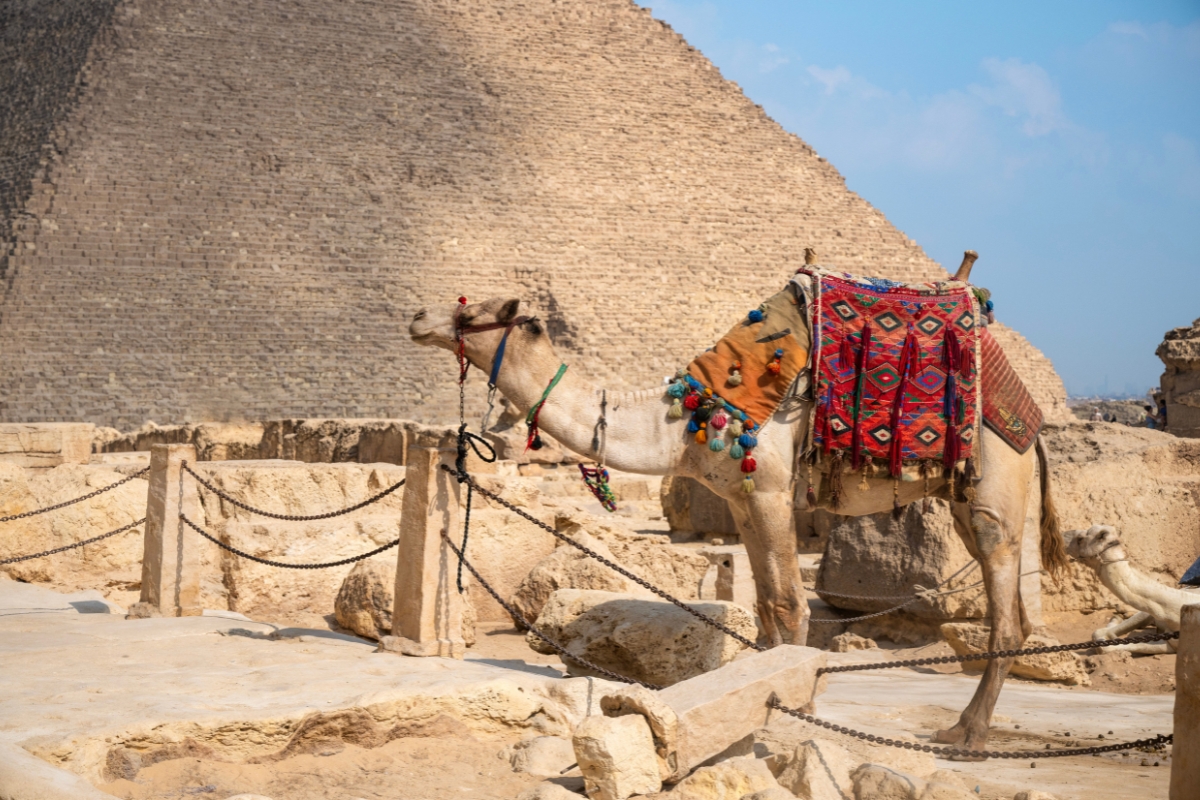
My journey through Egypt began in Cairo, a city where the ancient world and modern life stand side by side in one of the most fascinating contrasts on the planet. Nothing prepares you for the moment the Giza Pyramids emerge from the desert haze. Standing before the Pyramid of Khufu, built around 4,500 years ago, is a reminder of what human determination and ingenuity can achieve. More than 2.3 million limestone blocks, some weighing over 70 tons, were carved, transported, and aligned with near-perfect precision — all using tools as simple as copper chisels and wooden sledges.
Right beside Khufu, the Pyramids of Khafre and Menkaure complete the triad that has defined Egypt’s skyline for millennia. The enigmatic Great Sphinx, carved from a single limestone outcrop, still guards the plateau with the same calm expression it has worn since the Old Kingdom. It’s no wonder this is the oldest of the Seven Wonders of the Ancient World and the only one still standing.
Beyond the plateau, Cairo bursts with energy. The Nile River, Egypt’s lifeline since the dawn of civilization, cuts through the city with a rhythm that feels timeless. I wandered from Coptic Cairo, one of the earliest centers of Christianity, to Khan el Khalili’s labyrinth of gold, spices, textiles, and handcrafted brass lamps. Afternoons faded into golden sunsets from the Cairo Tower, where the city stretches endlessly in every direction.
Cairo reminded me that civilization is older, wiser, and more layered than we imagine — and that every stone, every alleyway, every call to prayer echoes a past that is still alive today.
Alexandria: Knowledge, Empire & Mediterranean Light
Section Type: standardWidthImageS
Exploring the city of Alexandria, Egypt. (Photo: Matias Sepulveda)
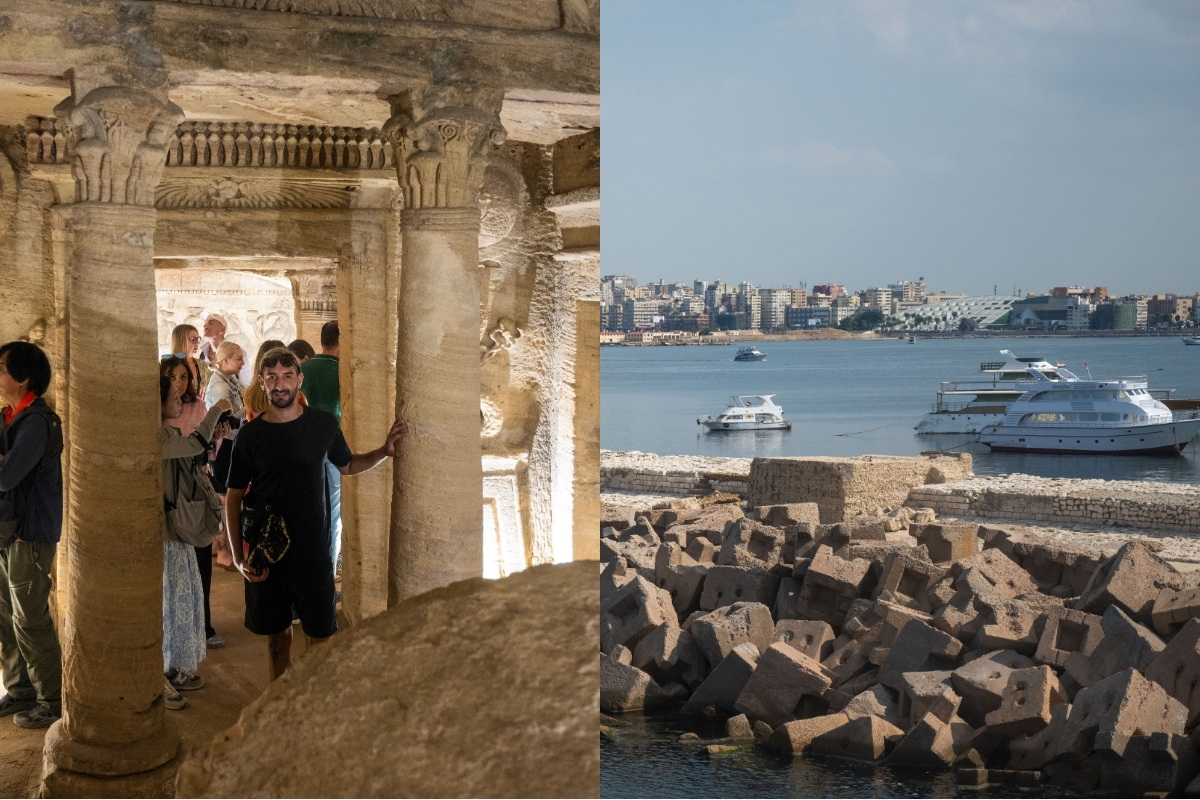
A 2.5-hour drive north took me to Alexandria, a city suspended between myth, empire, and sea. Alexandria was founded by Alexander the Great in 331 BC and quickly became the beating heart of Mediterranean scholarship, science, and culture. Walking its shoreline today, it’s impossible not to imagine the ancient Lighthouse of Pharos, once towering over 100 meters high and considered one of the Seven Wonders of the Ancient World.
The modern city preserves that legacy beautifully through the Bibliotheca Alexandrina, a monumental structure built as a tribute to the original Great Library. With space for over 8 million books, a manuscript restoration lab, and some of the most advanced digital archives in the Middle East, it is a living reminder that knowledge is the most powerful resource a society can protect.
Along the coast stands the Qaitbay Citadel, built in the 15th century on the exact site where the ancient lighthouse once stood. Its stone corridors and sea-battered walls feel like a bridge between Greece, Egypt, and the medieval Islamic world. Beneath the city, the Kom el-Shoqafa Catacombs reveal another layer of identity — a mixture of Egyptian, Roman, and Greek funerary art that shows how cultures merged here long before globalization was a concept.
Alexandria feels like a threshold — the place where Africa meets the Mediterranean, where empires collided and ideas transformed civilizations. As waves crashed against the Corniche at sunset, I felt what travelers have felt here for thousands of years: the sense that knowledge moves continents, and that Alexandria has always been a gateway.
Fayoum: Oasis, Desert Seas & Fossils of Evolution
Section Type: standardWidthImageS
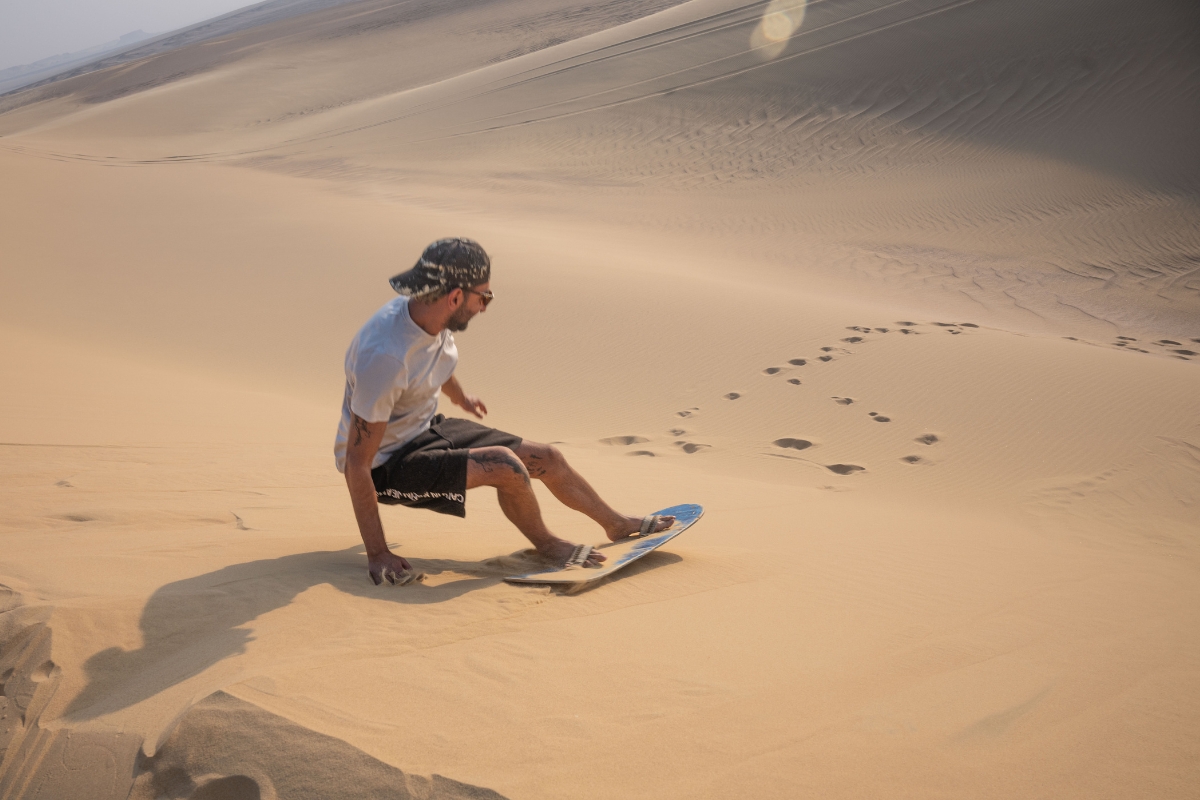
Sandboarding down the dunes in Wadi El-Rayan. (Photo: Matias Sepulveda)
Less than two hours from Cairo, I traveled to Fayoum, one of Egypt’s most surprising regions — an ancient oasis that has been continuously inhabited for more than 8,000 years. Fayoum is fed by channels branching from the Nile, creating fertile agricultural land that contrasts sharply with the vast deserts surrounding it.
My first stop was Wadi El-Rayan, a protected area famous for Egypt’s only natural waterfalls — a rare sight in a country known more for dunes than cascades. The surrounding landscape of rolling sandhills, serene lakes, and desert silence feels like stepping into a painting shaped by wind and time. Sandboarding down the dunes, surrounded by golden light, reminded me how nature shapes both geography and the way we experience it.
But the true highlight was Wadi Al-Hitan (Valley of the Whales), a UNESCO World Heritage Site and one of the most important paleontological areas in the world. Scattered across the desert are hundreds of fossilized skeletons of Basilosaurus and Dorudon — early whales that still possessed hind limbs, offering definitive proof of evolution from land mammals to marine creatures 🐋 Walking among these ancient bones, preserved in open-air desert beds, feels like witnessing the Earth’s own memory.
The day ended at Magic Lake, named for the way its colors shift with the sun and wind. Surrounded by stillness, the sunset turned the water into a mirror of soft pinks and oranges. Fayoum reminded me that the desert is not empty — it is full of stories written in stone, sand, and fossils older than humanity itself.
The Grand Egyptian Museum: A New Chapter for Ancient Heritage
Section Type: standardWidthImageS
Wandering through the Grand Egyptian Museum. (Photo: Matias Sepulveda)
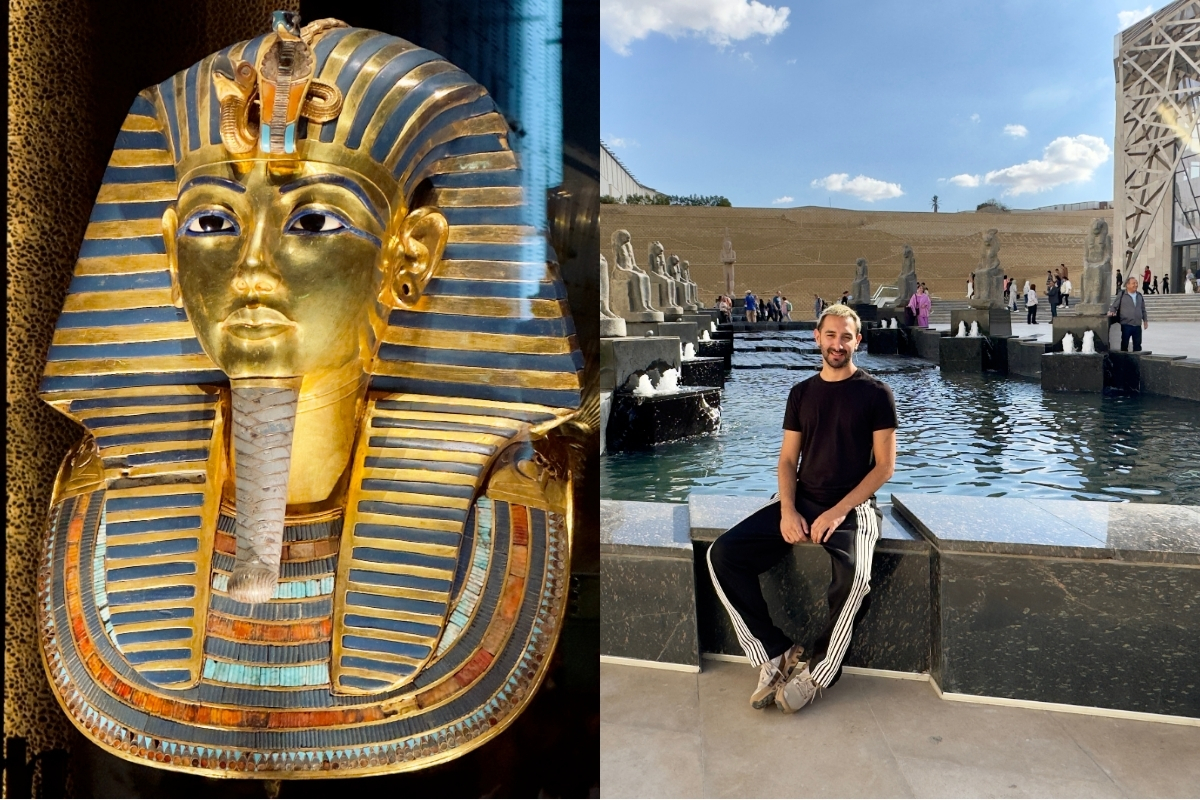
My last stop was the long-awaited Grand Egyptian Museum (GEM), a monumental complex beside the Giza Plateau that aims to become the largest archaeological museum on Earth. Stepping into the entrance hall, you’re greeted by an 83-ton colossus of Ramses II, illuminated by natural light cascading through geometric stone facades.
The museum’s design is intentional: every line, angle, and skylight points toward the Pyramids, blending modern architecture with ancient alignment. Inside, more than 100,000 artifacts tell the story of Egypt’s civilizations across thousands of years. For the first time since their discovery, the entire Tutankhamun collection — more than 5,000 pieces — is displayed together, including his sandals, chariots, jewelry, and the iconic golden mask. Seeing these objects arranged as they were found in the tomb feels less like observing history and more like walking into it.
Beyond the famous treasures, GEM showcases everyday items — pottery, tools, papyri, and statues — that reveal how ancient Egyptians lived, worked, worshipped, and understood the universe. Immersive galleries are dedicated to kingship, mythology, writing systems, and cosmology.
Standing on the museum’s terrace, with the pyramids rising across the desert, I felt how seamlessly Egypt connects past and present. This isn’t just a museum — it’s a national undertaking to protect memory on a scale rarely seen. As I left Cairo for the Red Sea, the message was clear: Egypt doesn’t preserve history for nostalgia — it preserves it as identity, pride, and continuity.
Section Type: cta
Ready to create your own adventure through Egypt? View our Private Egypt Tours or talk to a Destination Expert today.











Copyright © 2026 SA Luxury Expeditions LLC, All rights reserved | 8 The Green, Suite A, Dover, DE, 19901 | 415-549-8049