




In Chile’s Atacama Desert, the stars don’t whisper, they blaze. At 8,000 feet above sea level, under some of the driest, darkest skies on the planet, the Milky Way stretches overhead in jaw-dropping clarity. This is stargazing turned all the way up.
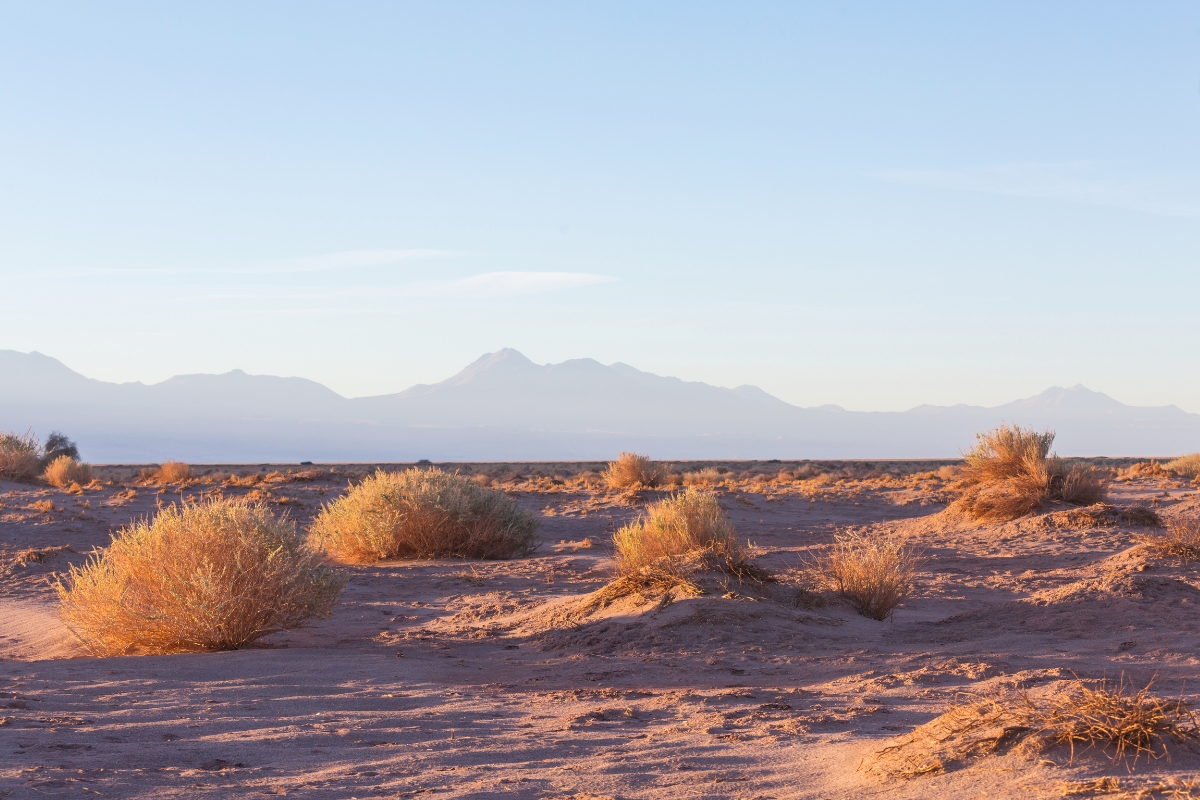
Few places on Earth feel as otherworldly as the Atacama Desert. Stretching across from the Pacific Ocean to the Andes, it’s often described as the driest non-polar desert in the world. Its salt-crusted plains, flamingo-dotted lagoons, and Mars-like valleys already make it a bucket-list destination. But when the sun drops below the horizon, the real magic begins.
Section Type: standardWidthImageS
The Atacama Desert in daylight.
Stargazer’s dream
The secret to the Atacama’s legendary night skies lies in a rare combination of geography and climate. The desert sits at high altitude (many viewing spots are over 8,000 feet above sea level) meaning there’s less atmosphere between you and the stars. Even more important, the region experiences around 300 clear nights per year. With virtually no humidity and almost no light pollution, the sky reveals a level of detail most people have never seen.
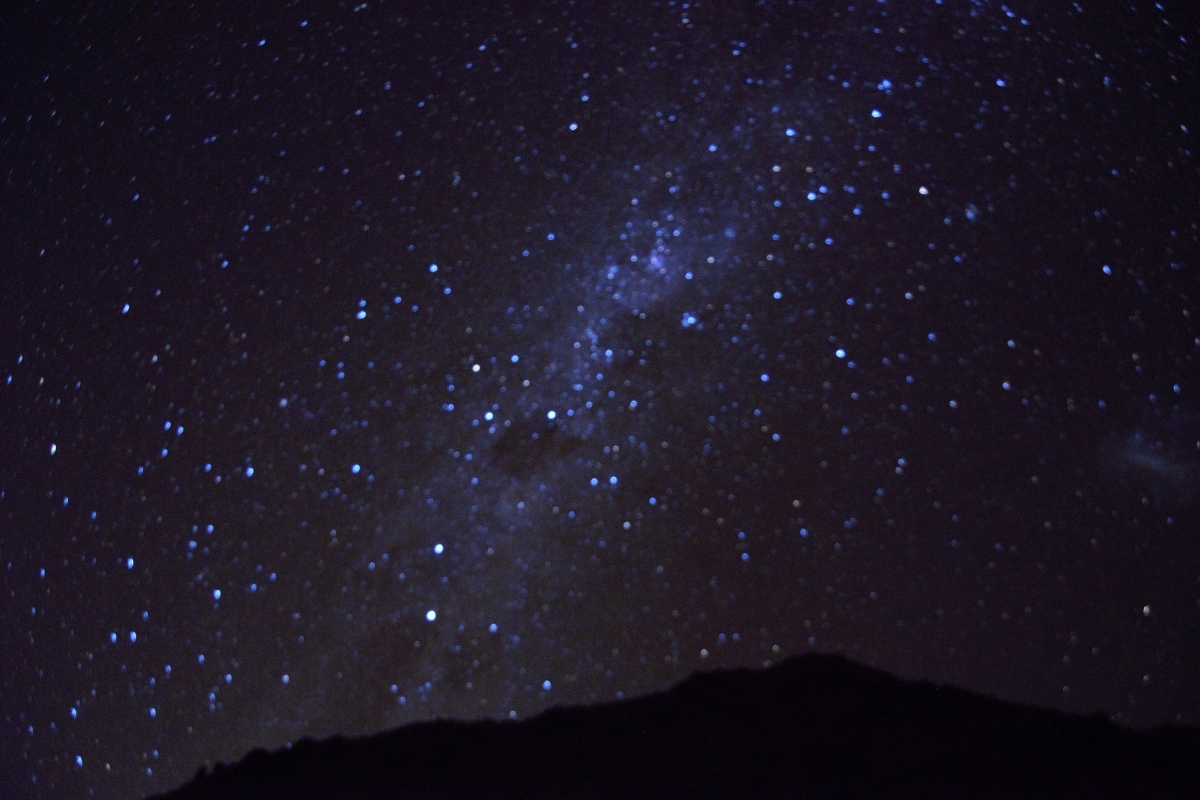
On a moonless night, the Milky Way stretches from horizon to horizon like a luminous river. Constellations appear sharp and three-dimensional. Satellites drift silently overhead. If you’re lucky, you might catch a meteor streaking across the darkness, especially during annual showers like the Perseids or Geminids.
Global astronomy hub
Scientists have long recognized the Atacama’s unique conditions, and some of the world’s most powerful telescopes operate here. One of the crown jewels of Atacama astronomy is the European Southern Observatory (ESO), which manages several world-class facilities in the region. Among them is the Very Large Telescope (VLT), perched atop Cerro Paranal. The VLT isn’t just one telescope but an array of four massive telescopes that can work together to simulate a much larger instrument. From here, astronomers study distant galaxies, exoplanets, and even the mysterious center of our own Milky Way.
Another remarkable installation is the Atacama Large Millimeter/submillimeter Array (ALMA), located high on the Chajnantor Plateau at over 16,400 feet above sea level. ALMA’s network of 66 radio antennae scans the cosmos in millimeter and submillimeter wavelengths, revealing cold, distant objects invisible to optical telescopes. Its discoveries have reshaped our understanding of how stars and planets form.
While most major observatories are not open for casual nighttime visits, some offer limited daytime tours that provide fascinating insights into cutting-edge astronomy. Even if you never step inside a research facility, simply knowing that groundbreaking discoveries are happening overhead adds a special thrill to your stargazing session.
See it for yourself
Most stargazing takes place in the vicinity of San Pedro de Atacama, a small adobe town that serves as the region’s tourism hub, and is the gateway to our favorite Atacama lodges.
We offer guided experiences that typically last two to three hours. After a short drive away from town lights, you’ll gather at an open-air observatory equipped with powerful telescopes. Guides, often passionate amateur astronomers, walk you through the night sky, pointing out constellations of the Southern Hemisphere such as the Southern Cross, as well as nebulae, star clusters, and distant galaxies. Many tours include astrophotography sessions, where you can pose under the Milky Way while long-exposure cameras capture stunning images.
Section Type: standardWidthImageS
The starlit Atacama sky.
Under southern skies
If you’re visiting from North America or Europe, the Atacama offers a completely different celestial perspective. The Southern Cross (Crux) is one of the most iconic constellations, small but bright and easy to identify. The Magellanic Clouds (two irregular dwarf galaxies orbiting the Milky Way) appear as hazy patches to the naked eye. Through a telescope, you can explore star clusters like Omega Centauri, the largest globular cluster visible from Earth, containing millions of stars packed tightly together.
During certain months, the center of the Milky Way is perfectly positioned for viewing. From May to September, the galactic core dominates the sky in dramatic fashion. Its dense star clouds and dark dust lanes create a spectacle that feels almost unreal.
Emotional impact
There’s something profoundly humbling about standing in silence beneath a sky ablaze with stars. In the Atacama, the absence of artificial light makes the universe feel immediate and intimate. You can trace the arc of the Milky Way with your finger. You can see depth and contrast in the sky that photos rarely capture accurately.
Many travelers describe the experience as spiritual. In a world dominated by screens and city lights, true darkness has become rare. The Atacama restores that sense of cosmic perspective. You are reminded that Earth is just one planet orbiting one star among billions. For some, this moment sparks a lifelong interest in astronomy.
When to visit
The best time to visit the Atacama Desert for stargazing is generally between March and November, when skies are clearest and rainfall is minimal. For the most dramatic Milky Way views, plan your trip between May and September, when the galactic core is high and bright in the night sky. Southern winter, from June through August, offers especially crisp, dry air, though temperatures drop sharply after sunset. While summer months are warmer, occasional high-altitude rains can bring cloudier conditions to the region.
Whenever you go, aim to travel around a new moon to avoid light interference.
Section Type: backgroundOnly
Stargazing in the Atacama Desert is more than ticking off a travel highlight. It’s an immersion into one of the clearest windows to the universe available on Earth. There’s a quiet impact that comes from seeing the Milky Way with such clarity. It’s a reminder of scale and perspective, that will stay with you long after you have left the Atacama.
Section Type: cta
The stars are waiting. Speak with a Destination Expert to craft a tailor-made Atacama experience, or browse our curated Atacama tours to begin planning your adventure.











Copyright © 2026 SA Luxury Expeditions LLC, All rights reserved | 8 The Green, Suite A, Dover, DE, 19901 | 415-549-8049